37. Introduction to Special Issue on Advances in Peptide Therapeutics
Since the introduction of insulin 100 years ago and the invention of the solid phase peptide synthesis (SPPS) in 1963, therapeutic peptides have been applied to a wide range of diseases, including diabetes, cancer, bacterial/viral infections and pain.

36. Systematic Comparison of Activity and Mechanism of Antimicrobial Peptides Against Nosocomial Pathogens
Highlights
· Detailed activity and mechanistic studies of AMPs, including Pardaxin, MSI-78, dermaseptin-PC (DMPC) and Cecropin B, against a panel of Gram-negative and Gram-positive bacteria.
· The most active Pardaxin (1–22) and MSI-78 (4–20) displayed strong membrane activity towards Gram-negative and Gram-positive bacteria.
· Different mechanisms of DMPC (1–19) and Cecropin B (1–21) against Gram-negative and Gram-positive bacteria will guide the rational design of new AMP analogues.
· Molecular dynamics simulation further provided the details of their structure and activity relationship.

35. Development and Application of Diels-Alder Adducts Displaying AIE Properties
Highlights
· AIE scaffold (ENAP) created through a facile catalyst-free Diels-Alder reaction
· Introduce the sulfonyl fluoride group as a hub for further modification
· Utilize ENAPs to develop high-quality latent fingerprint images
· Utilize ENAPs for bioimaging
![34. [Journal Cover] Enhancing Proline-Rich Antimicrobial Peptide Action By Homodimerization: Influence of Bifunctional Linker](https://images.squarespace-cdn.com/content/v1/642d0cb753153160d6508469/1680841131306-FDR1RF1RGSXSGZ52TQFI/5.5.jpg)
34. [Journal Cover] Enhancing Proline-Rich Antimicrobial Peptide Action By Homodimerization: Influence of Bifunctional Linker
Antimicrobial peptides (AMPs) are host defense peptides, and unlike conventional antibiotics, they possess potent broad spectrum activities and, induce little or no antimicrobial resistance. They are attractive lead molecules for rational development to improve their therapeutic index.
33. The Potential of Multimeric Antimicrobial Peptide Materials as Superbug Killers
Antimicrobial peptides (AMPs) are found in nearly all living organisms, show broad spectrum antibacterial activity, and can modulate the immune system. Furthermore, they have a very low level of resistance induction in bacteria, which makes them an ideal target for drug development and for targeting multi-drug resistant bacteria ‘Superbugs’.

32. Discovery and Characterization of a New Crustin Antimicrobial Peptide from Amphibalanus Amphitrite
Crustins are an antimicrobial peptide (AMP) family that plays an important role in innate immunity in crustaceans. It is important to discover new AMPs from natural sources to expand the current database. Here, we identified and characterized a new crustin family member, named AaCrus1, from Amphibalanus amphitrite.
31. The Potential of Calcium Phosphate Nanoparticles as Adjuvants and Vaccine Delivery Vehicles
Vaccination is one of the most efficacious and cost-effective ways to protect people from infectious diseases and potentially cancer. The shift in vaccine design from disrupted whole pathogens to subunit antigens has brought attention on to vaccine delivery materials.
30. Tumor Associated Macrophages: Origin, Recruitment, Phenotypic Diversity, and Targeting
The tumor microenvironment (TME) is known to have a strong influence on tumorigenesis, with various components being involved in tumor suppression and tumor growth. A protumorigenic TME is characterized by an increased infiltration of tumor associated macrophages (TAMs), where their presence is strongly associated with tumor progression, therapy resistance, and poor survival rates.

29. Peptide Multimerization as Leads for Therapeutic Development
Multimerization of peptide structures has been a logical evolution in their development as potential therapeutic molecules. The multivalent properties of these assemblies have attracted much attention from researchers in the past and the development of more complex branching dendrimeric structures, with a wide array of biocompatible building blocks is revealing previously unseen properties and activities.
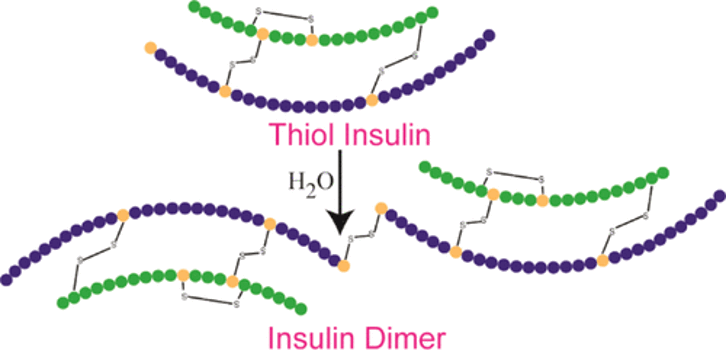
28. Engineering of a Biologically Active Insulin Dimer
The growing epidemic of diabetes means that there is a need for therapies that are more efficacious, safe, and convenient. Here, we report the efficient synthesis of a novel disulfide dimer of human insulin tethered at the N-terminus of its B-chain through placement of a cysteine residue.