58. Therapeutic potential and resistance of proline-rich antimicrobial peptides
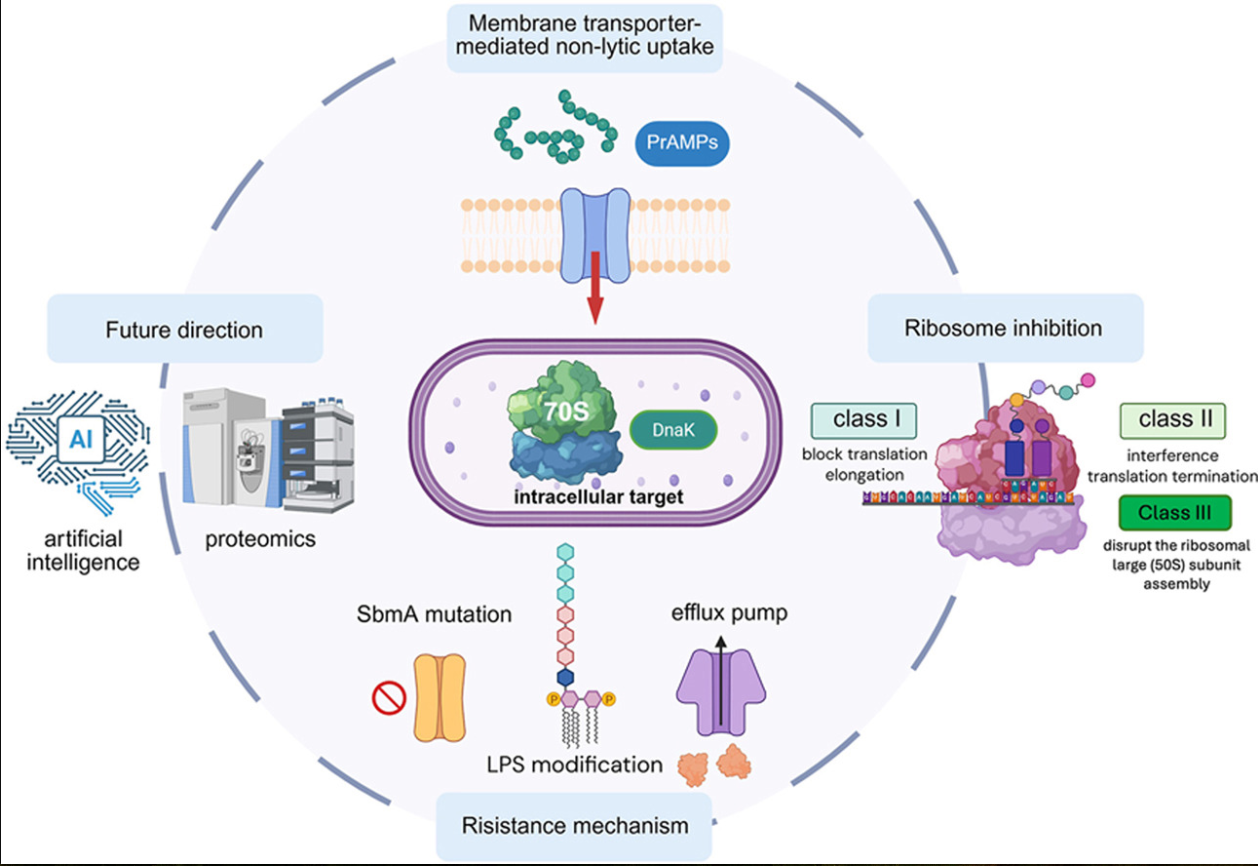
Abstract:
The rapid emergence of multidrug-resistant bacteria has underscored the urgent need for alternative antimicrobial strategies. Proline-rich antimicrobial peptides (PrAMPs) constitute a unique class of antimicrobial peptides characterised by high proline/arginine content and predominantly non-lytic mechanisms of action. Unlike many other membrane-disrupting peptides, PrAMPs often enter bacterial cells through dedicated uptake pathways and primarily act on intracellular targets, most notably the 70S ribosome, and other pathways such as interactions with DnaK. However, bacterial resistance to PrAMPs can emerge through reduced peptide uptake and changes in membrane composition. This review summarises current knowledge on the structural features, antibacterial mechanisms, and resistance of PrAMPs. In addition, recent advances in peptide engineering and multitarget design strategies aimed at overcoming resistance are discussed. This review aims to highlight the distinctive antibacterial properties and the therapeutic potential of PrAMPs within the broader landscape of antimicrobial peptides.
Liang, C.; Zhang, T.; Menekse, A.; Wade, J. D.; Li, W.* (2026). Therapeutic potential and resistance of proline-rich antimicrobial peptides, Current Opinion in Chemical Biology (corresponding author), Volume 93, August 2026, 102699 DOI: 10.1016/j.cbpa.2026.102699